Site logo
  • Home
  • Contact Us
  • Shop
  • Links
    • Archaeology
    • Books
    • Maps
    • Organisations
    • Images
    • Places of Interest
  • Galleries
    • A Flavour of Sutton Coldfield
    • SCLHG Visits
    • Research
    • Contributions
  • History Spot
  • Research
    • Transcriptions
    • Original Research
    • Maps
    • Proceedings
    • Research Tools
    • Non-Member’s Research
  • Maps
  • Serendipity
    • Artefacts
    • Memories
    • Videos of Sutton
    • Pamphlets
    • Postcards
    • Remembering Roger Lea
    • Remembering Stephen Roberts
    • Sutton Coldfield Poetry
    • WWII
  • Join Us
  • Sign In

    Forgot your username?
    Forgot your password?

Sutton Coldfield Local History Research Group

Regular meetings currently held from 2:30pm to 4:00pm in Holy Trinity Parish Church, Sutton Coldfield.
  • Home arrow
  • Public arrow
  • Serendipity arrow
  • Remembering Stephen Roberts
Sutton Coldfield in the mid-19th century

Ann's Harrowing Ordeal
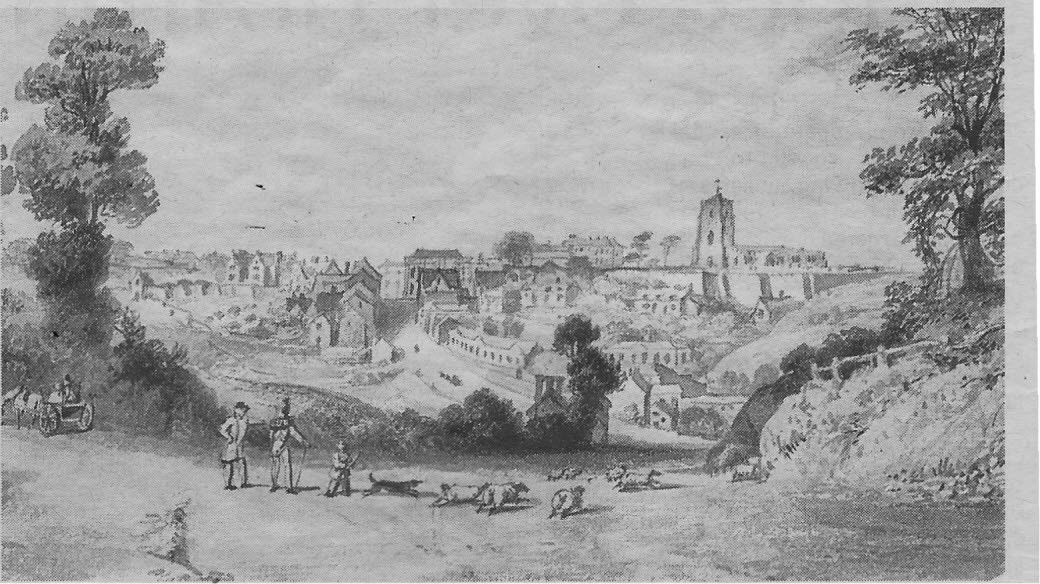
Sutton Coldfield in the mid 19th century
View of Sutton Coldfield in the mid-19th century by Agnes Bracken. Reproduced by permission of Sutton Coldfield Library

When Queen Victoria came to the throne in 1837, Sutton Coldfield was a small market town, with a population of about 4,000 - and there was no police force. A watchman, usually of advancing years, patrolled the streets at night.

There was also a parish constable, who would be summoned to crime scenes and then question witnesses and, on occasion, make arrests. For many years this was Thomas Butler, who lived in a house near Holy Trinity Church.

The parish constable was not paid. He dealt with wrongdoings ranging from drunkenness to robberies and burglaries.

Ann Taylor was a wealthy 75-year old widow who had moved to Sutton from Liverpool. She owned property in Liverpool and this provided her with an annual income of £1,700.

She settled in Wylde Green - also known at the time as Wild Green. The few years that Taylor spent in Sutton were to be harrowing. First, in autumn 1836, her house was burgled; and then, a few years later, she was the victim of attempted fraud.

The culprit for the burglary was William Jones, who gained entry by befriending two of Taylor's servants. One of these young women received a proposal of marriage from Jones and the other became pregnant.

One of these women informed the parish constable that Jones had entered the house, revealing that he had informed her that he had hidden a plate in a haystack. Jones was sentenced to transportation for life to Van Diemen's Land.

When the magistrate who had investigated the burglary, Francis Lloyd, a banker, came to live in Sutton, Taylor was pleased to establish a friendship with him.

Lloyd ingratiated himself with Taylor, paying regular visits and sending presents of fruit, game and flowers. He also introduced her to a Mrs Harding, a young woman who had taken a house in the area and who he declared was a widow.

Lloyd informed Taylor that he intended to marry Harding and proposed that the three of them live together, flatteringly telling Taylor she could provide his new wife with guidance on domestic matters. Providing Taylor with a pass book and a cheque book, he began to make payments to himself. When he was unable to withdraw £1,000 from her account as requested and Taylor informed one of her rent collectors in Liverpool, Lloyd's scheming came into the open.

Taylor began legal action to recover her money and was awarded £1,281 in damages. Meanwhile it was revealed that Harding, far from being a young widow, was involved with Lloyd, being the mother of his two children.

Glimpses into Sutton's Past Part I 1800-1850 and Part II 1851-1885 by Stephen Roberts can be ordered from Amazon, priced at £4.99 and £5.99.

Associate Professor
Stephen Roberts

  • Author: Stephen Roberts (SCLHRG)
  • Published: 29th April 2021
  • Serendipity
  • Remembering Stephen Roberts
The Three Tuns
The Three Tuns

Pubs from Town's Past

The Three Tuns
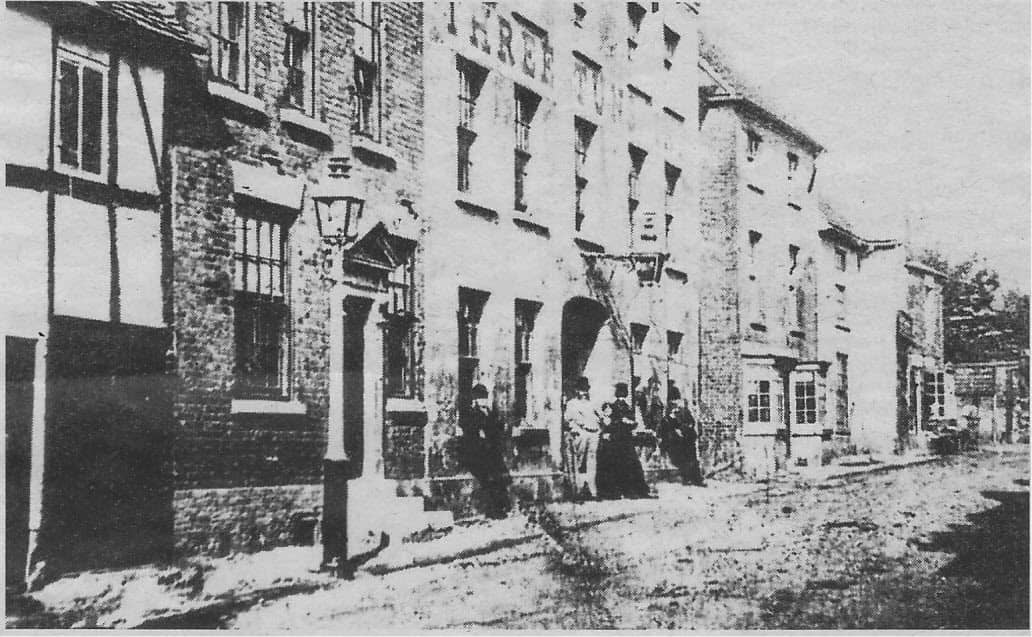
A past picture of The Three Tuns in Sutton. Picture: Sutton Reference Library

There was no shortage of drinking places in Sutton Coldfield in the 19th century.

Travellers from Birmingham were able to call in, or even stay at, the Horse and Jockey.

A newspaper advertisement from 1824 tells us that this tavern had two large parlours, a kitchen, a.brew house, piggeries and five bedrooms.

If a traveller did not stop at this pub, then it was not far to The Cup.

Here the long-serving landlord George Bunn offered 'a good family dinner' each day at 1pm, and encouraged trade from Birmingham on Sundays, providing the times of omnibuses which would give visitors 'ample time for refreshment and a stroll in Sutton Park.'

For those who were arriving in the town from Lichfield there was The Swan, located next to 'Bishop Vesey's Grammar School. Charles Spencer had been landlord for more than 20 years when he died in December 1828; his niece Frances Roe took over but died in July 1833.

This tavern was demolished at the beginning of the 20th century.

These pubs brewed their own beer, generally fairly weak, and were open all day.

With water unsafe to drink, beer was very popular for quenching the thirst of the farm labourers who toiled in the fields around Sutton. Drunken and disorderly behaviour often brought men and women before the magistrates.

In the 1880s, the fine was between one and ten shillings and costs, with previous convictions and how defendants reacted on being arrested by the police constables taken into account. The public houses of Sutton were frequented by particular classes.

At The Cup, there was a scheme in the 1820s to club together to buy a licence to fish in Wyndley Pool- suggesting that respectable working men often met there.

At the Three Tuns, a quantity of bank notes was left behind by one patron in 1832 - clearly the gentlemen of the town gathered there.

Pubs were also used for inquests and for auctions. When Charles Barker, the headmaster of Bishop Vesey's Grammar School was found dead in Penns Lane in October 1842, the inquest took place at the Swan; and, when William Orme died after falling under a train at Sutton railway station in February 1866, the inquest was held at the Station Inn.

At the auctions houses, furniture, timber and livestock were sold, usually by Samuel Kempson, a tanner who had set himself up as an auctioneer.

Stephen Roberts' books Glimpses into Sutton's Past Part I 1800-1850 and Glimpses into Sutton's Past Part II 1851-1885 can be ordered from Amazon, priced at £4.99 and £5.99 respectively.

Associate Professor
Stephen Roberts

  • Author: Stephen Roberts (SCLHRG)
  • Serendipity
  • Remembering Stephen Roberts
  • Created: 6th May 2021
  • Read more …
Public hangings
Public hangings

Tragic Tale of Jealousy

Public hangings for murder were not an unusual sight back in those days

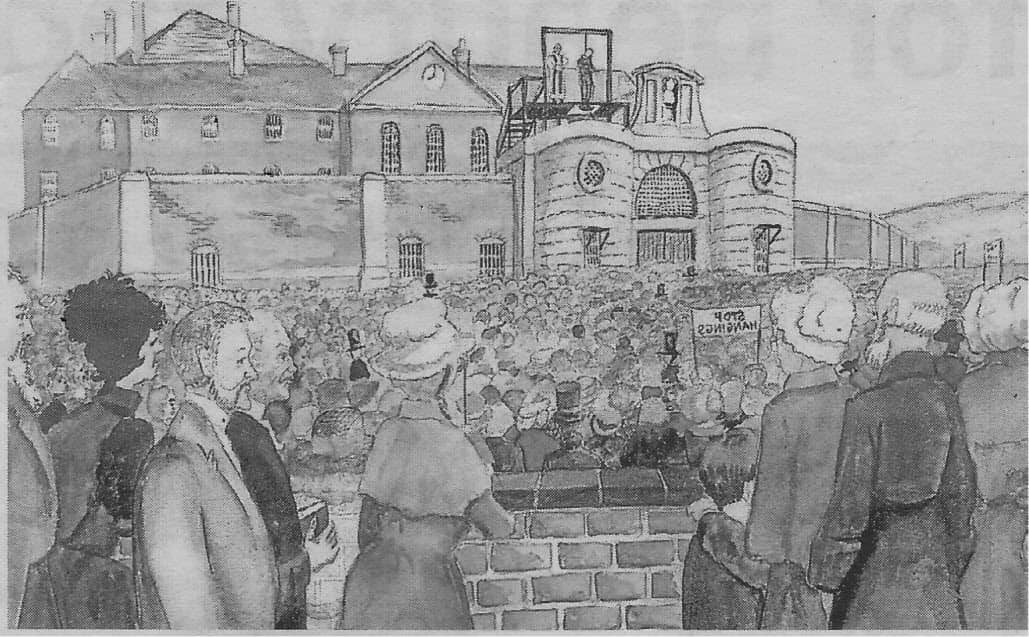
On December 30, 1861, John Thompson of Sutton Coldfield was hanged for murder in front of the county gaol in Warwick.

By this time only murderers were hanged. Thompson was the only inhabitant of Sutton Coldfield to be executed for murder in the 19th century.

He was a wire drawer working in Aston and living in Sutton with Ann Walker, a married woman who had been estranged from her husband for several years and who he referred to as his housekeeper, and his five children.

The killing of Walker took place at a lodging house in Tanter Street in Birmingham.

Thompson and Walker had visited a fair in the town and were staying overnight at the lodging house. The next day they visited a number of pubs, at one of which Walker encountered a man with whom she had formerly co-habited. Walker returned to the lodging house and was soon followed by Thompson. Both were drunk.

An argument ensued in their room and Thompson cut Walker's throat. At the trial, Thompson's barrister, hastily pressed into service by the judge, urged the jury to. deal with him as they would a man of higher status.

The judge, however, made clear this was a case of murder, and the jury, in a very short time, returned a guilty verdict. An appeal to the Home Secretary for clemency was rejected. In his written confession, Thompson accused several witnesses who addressed the court of perjury but accepted his guilt and expressed his regret.

"I am sorry I did it for I was very fond of her and she was a good clean woman in the house," he wrote. Thompson was executed alongside another man convicted of murdering his wife.

They had both attended a service in the chapel before being pinioned and escorted to the scaffold. The executioner put on the caps, shook their hands and pulled the bolt. Their bodies were buried within the precincts of the gaol. It was tragic story of jealousy and rage, greatly aggravated by alcohol.

Public hangings for murder during these years were not an unusual sight. Attempts were made repeatedly by radical MPs to end capital punishment altogether, always unsuccessfully. In 1868 public hangings were brought to an end. The last man to be publicly hanged in England was an Irish Fenian Michael Barrett. Thereafter hangings took place behind prison walls. This was seen as advancing civilised behaviour. Executions continued to take plate in prisons for almost another century, finally ending in 1964.

Glimpses into Sutton's Past Part I 1800-1850 and Part II 1851-1886 by Associate Professor Stephen Roberts can be ordered from Amazon, priced at £4.99 and £5.99.

Associate Professor
Stephen Roberts

  • Author: Stephen Roberts (SCLHRG)
  • Serendipity
  • Remembering Stephen Roberts
  • Created: 13th May 2021
  • Read more …
  •  
  •  
  •  
  •  
  •  
  •  
  •  
  •  
  •  
  •  
  •  

Recent Research

Transcription of Rental 1635-1642

Transcription of Rental 1635-1642
In February 2026, a photocopy of the Sutton Coldfield Rental 1635-1642 was discovered amongst Albert Fentiman’s Research Collection which is lodged with Archives & Collections at the Library of Birmingham and is now the earliest Rental we currently have for Sutton Coldfield, preceding the 1734 Corporation Rental. This now introduces many names and places that might appear on other 17th century documents.
  • Author: Kerry Osbourne; Janet Jordan (SCLHRG)
  • Published: 6th April 2026
  • Research
  • Original Research
  • View this Transcription …

The Life of Lieutenant Colonel Richard Holbeche

The Life of Richard Holbeche
Long before the advent of iPhones, this history of the life of Lieutenant Colonel Richard Holbeche was written and illustrated in 1998. Nowadays one could expect clearer photographs, but the details of Richard’s life have not changed. Few people are aware that the man who wrote the well-known “Holbeche Diary” in his forties, whilst on retirement in Sutton Coldfield, had also led and would, in future, lead a very surprising and worthwhile path of life.
  • Author: Janet Jordan (SCLHRG)
  • Published: 9th April 2026
  • Research
  • Original Research
  • View this Research …

Two Sixteenth-Century Maps of Minworth and their context

Two 16th Century Maps of Minworth and their context
These maps have proved to be an exciting find for Sutton Coldfield historians! Here we have two of the earliest maps of the area around Minworth and Sutton Coldfield, together with a very comprehensive explanation as to what they both depict. In addition, there are a couple of other pertinent maps and all together they will keep the local enthusiast happy for hours!
  • Author: Mike Hodder (SCLHRG)
  • Published: 5th March 2026
  • Research
  • Original Research
  • View this Research …

The Phillips Family File

The Phillips Family File
The Phillips Family were related to Richard Hurst Sadler and his brother Ralph. At one time Richard, a solicitor, was in business was Thomas Eddowes and Thomas’ son, Herbert, acted for the Phillips in a protracted case relating to wills and probates. This article follows the case and throws some light on legal practice a century and a quarter ago.
  • Author: Kerry Osbourne (SCLHRG)
  • Published: 10th February 2026
  • Research
  • Original Research
  • View this Research …
  • Visitors:
  • MOD_JSVISIT_COUNTRY_ZZ42%Unknown
  • MOD_JSVISIT_COUNTRY_GB36%United Kingdom of Great Britain and Northern Ireland
  • MOD_JSVISIT_COUNTRY_US18%United States of America

History Spot

Rabbits [28]

sdc10094.png
Rabbits
Rabbits are not native to this country, having been introduced in the twelfth century, but they had been bred on mainland Europe since...
  • Published: 7th November 2008

Read More …

Photo Galleries

Visit to Coffin Works on Tuesday, 10th March 2026

Visit to Coffin Works on Tuesday, 10th March 2026 Visit to Coffin Works on Tuesday, 10th March 2026 Visit to Coffin Works on Tuesday, 10th March 2026 Visit to Coffin Works on Tuesday, 10th March 2026

Visit to Birmingham City Council House on Thursday, 27th March 2025

Main Staircase and Statue of Queen Victoria - Visit to Birmingham City Council House on Thursday, 27th March 2025 The Frosted Windows and Statue of Prince Albert - Visit to Birmingham City Council House on Thursday, 27th March 2025 The Glass Corridor leading to Museum Art Gallery - Visit to Birmingham City Council House on Thursday, 27th March 2025 Royal Photos - Visit to Birmingham City Council House on Thursday, 27th March 2025

Victorian Afternoon Tea - 30th March 2023

Buttons - Victorian Afternoon Tea - 30th March 2023 A view of the room - Victorian Afternoon Tea - 30th March 2023 The Moulded Ceiling - Victorian Afternoon Tea - 30th March 2023 Notice the Golden Eggs on the ceiling - Victorian Afternoon Tea - 30th March 2023
Jonessoft
  • Privacy
  • Disclaimer
  • Support
  • Sitemap

Copyright © 2026 Sutton Coldfield Local History Research Group. All Rights Reserved.

Pavilion
Unlimited Web Hosting